
OpEd-At Some Point, It Should Be Mine
Published by Appalachia Insider · October 3, 2026
This opinion piece was contributed to Appalachia Insider. The views expressed are those of the author and do not necessarily reflect the views of Appalachia Insider.
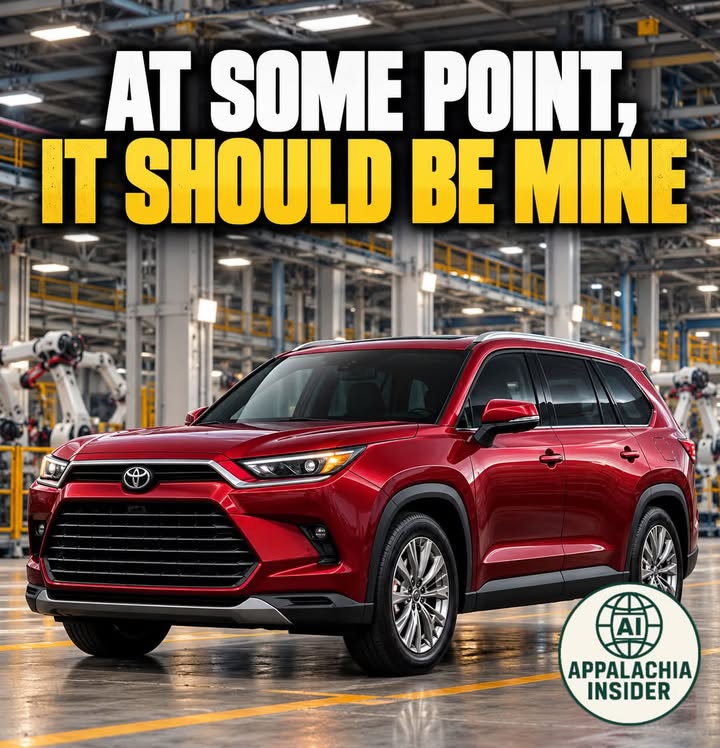
I bought a Toyota Grand Highlander that cost around $60,000. I financed it through Toyota. Every month, I make a large payment on a vehicle that I am told I own. Toyota made money selling me the vehicle. Toyota makes money financing it. And inside that vehicle are features I paid for. Remote start. Climate control. Heated seats. Power locks. Computers and software that tie all of it together.
Toyota also has an app that lets me use some of those features remotely. If I want to keep using it, Toyota wants another $8 a month.
Eight dollars is not going to bankrupt me. That is not the point. The point is that I already bought the car.
The hardware is already there. The software was already developed. The computers are already installed. The vehicle was priced with all of that included, along with Toyota’s cost of engineering it, building it, selling it, supporting it, and making a profit from it.
I understand Toyota has servers to maintain. I understand there is cellular infrastructure involved. I understand software has to be updated. My answer is simple.
Use some of the money I already paid you.
Servers and cell service are costs Toyota knew about when it set the price. They are the cost of doing business, and the sticker price is supposed to cover the cost of doing business.
That used to be part of selling a product. A company figured out what something cost to build, support, warranty, and maintain, added enough to make a profit, and sold it to you. The transaction had an ending. What seems to be changing is the idea that every continuing expense inside a corporation should become another continuing charge against the customer.
And once you accept that idea, I am not sure where it stops.
There is nothing technologically preventing Toyota from deciding one day that air conditioning costs $2 every time I use it. The compressor is already there. The refrigerant is already there. The climate control computer is already there. I paid for all of it. But software could still stand between me and the equipment I own.
Press the button. Two dollars.
That sounds ridiculous today. But there was a time when paying every month to use software already installed on your own computer would have sounded ridiculous too. Now most of us barely think about it.
That is what bothers me more than the eight dollars. It is how quietly the meaning of ownership can change while we keep using the same word.
We still say, “I own my car.”
But apparently ownership can now mean that I possess the physical object while the manufacturer retains some continuing authority over what that object is allowed to do.
For most of our lives, buying something meant that eventually the payments stopped and the thing became yours. A washing machine. A television. Tools. Furniture. A car. A house. Maybe you didn’t own much, but over the years you slowly removed obligations from your life.
That was part of the reward for working.
You weren’t just consuming. You were building.
Every payment on a house moved you a little closer to owning the roof over your head. Every car payment moved you closer to a month when there wouldn’t be one. The furniture stayed in the living room after the bill was gone. The tools in the garage were still there whether you got paid Friday or not.
Work slowly became property, and property gave you a little independence from having to work forever.
I think that is the part we are beginning to lose.
Now more and more of life works the other way. You subscribe to your music. Your movies. Your software. Your cloud storage. Features in your car. You rent the house. You lease the equipment. You pay for continued access.
Eight dollars here. Twelve dollars there. Five dollars somewhere else. None of it looks outrageous by itself. That is exactly why it works.
Add enough of those payments together and you can spend an enormous amount of money over a lifetime and still own very little that reduces your need for next month’s paycheck. You become a permanent payer. Everything works as long as the payments keep clearing.
That is a fragile kind of prosperity.
And I think people are beginning to feel it. You can hear it in the complaints about products getting worse while prices go up. Packaging getting cheaper. Features disappearing. Things that used to last ten years wearing out in two. Subscriptions appearing in places nobody ever imagined them.
Printer ink, for one.
Not every complaint is proof of corporate greed. Sometimes there are real costs and complicated reasons behind these changes. But I think people are sensing something real underneath all of it.
The relationship between the customer and the company is changing.
There was a time when a business wanted to sell you something good enough that you would come back years later and buy another one. Now the perfect customer may be somebody who never really leaves.
Sell me something once and you make money once.
Keep a small claim on my future income and you can make money from me for years.
Nobody has to sit in a boardroom and decide to create a permanent renter class. Every company can simply make the individually rational decision to turn one more thing from ownership into access. One more subscription. One more service fee. One more feature that works only as long as the payment does.
And eventually we can wake up in an economy nobody consciously designed, where ordinary people technically possess plenty of things but control very little without someone else remaining in the relationship.
Then AI arrives.
That is where this becomes much bigger than an annoying Toyota subscription.
For generations, most of us entered the economy with one thing to sell: our labor. We worked, got paid, bought things, and if we were fortunate, slowly converted those wages into ownership. A house. Land. Retirement savings. A small business. Investments. Something that either produced value or reduced how much we would need to earn later.
That was the ladder.
But what happens if ownership becomes harder to obtain at exactly the same time labor becomes less necessary to production?
AI does not have to eliminate every job for that to matter. It only has to allow fewer people to produce more. A company that once needed 1,000 workers may eventually need 800. It doesn’t have to fire 200 people in one morning. People retire. People leave. Jobs simply aren’t refilled. Entry-level positions disappear. Departments shrink.
The work still gets done. There are just fewer people needed to do it.
The value of that work does not disappear. More of it can flow to whoever owns the company.
And if the value of labor weakens while the value of ownership rises, then the person who owns very little is standing in a dangerous place. If you own part of the company using AI, rising productivity can make you wealthier. If your only meaningful economic asset is your ability to work, the same technology can make that asset less scarce.
Now combine that with a society where more and more of your life depends on recurring payments. You do not own the house. You do not own much stock. You do not own the software. You do not own the infrastructure. You may not even have full control over all the features in the vehicle sitting in your driveway. But every month, all of those owners still have claims against your income.
That is the future I worry about more than robots taking every job. Maybe most people keep working. Maybe that is actually the problem. They keep working. They keep paying. They keep consuming. They just own less and less of the world their work is helping to sustain.
And eventually that leaves us with a question much bigger than whether we call the answer capitalism, socialism, communism, or something else. If work becomes less important to producing value, and ordinary people own less of what does produce value, then what gives them a claim on any of it?
I do not object to somebody becoming fantastically wealthy for creating something that changes the world. If you take an extraordinary risk and create extraordinary value, you should benefit from it. The problem is not that the person who builds the machine becomes rich. The problem is what happens if almost everyone else eventually owns none of the machines.
Then we have created an economy capable of producing more than any civilization in human history while concentrating the ownership of that production into fewer hands. And I do not think people will quietly accept that forever.
You can already hear the language changing. It is no longer only, “I need a raise.” People are asking why they cannot afford a house. Why everything is a subscription. Why the thing they bought never quite feels like theirs. Why their parents seemed able to spend their working lives slowly building ownership while they are spending theirs building a collection of monthly obligations.
That is a different complaint. Higher wages let you consume more. Ownership gives you something harder to measure. It gives you a place where the payment finally stops.
Maybe that is what feels so wrong about an eight-dollar subscription on a sixty-thousand-dollar vehicle. It is not eight dollars. It is the idea behind it.
I already paid you.
At some point, the purchase should be over.
At some point, the thing should simply be mine.
~CA
OpEd: The preceding information does not necessarily reflect the views of Appalachia Insider as an organization.
#AppalachiaInsider #OpEd #ConsumerRights #Ownership #SubscriptionEconomy #ArtificialIntelligence #EconomicChange #WorkingClass