
OpEd: This Vote Will Outlive the Governor
Published by Appalachia Insider · October 24, 2026
This opinion piece was contributed to Appalachia Insider. The views expressed are those of the author and do not necessarily reflect the views of Appalachia Insider.
I’ve been looking over Kentucky’s proposed Amendment 1, and something keeps coming back to me. Not necessarily whether the amendment is right or wrong, but whether we fully appreciate what we’re being asked to decide.
On November 3, Kentucky voters will decide whether to amend our state Constitution to restrict the governor’s authority to grant pardons, commute sentences, and issue reprieves during the period beginning sixty days before a gubernatorial election and ending on the fifth Tuesday afterward.
A relatively short period, once every four years.
But the constitutional change would not be temporary.
We know much of what brought us here. In 2019, outgoing Governor Matt Bevin issued hundreds of pardons and commutations following his election defeat. Some involved serious crimes, and the decisions generated considerable controversy.
That controversy raised legitimate questions about accountability and the extraordinary powers entrusted to our governor.
But Amendment 1 isn’t a vote on Matt Bevin. It’s a decision about the constitutional authority of every governor who follows him.
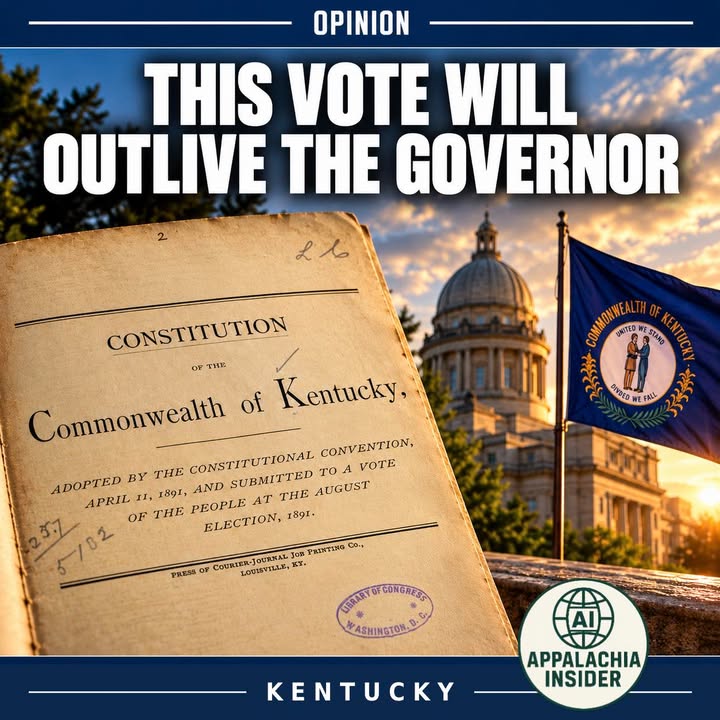
Kentucky’s current Constitution was adopted in 1891. For 135 years, Section 77, which establishes the governor’s pardon authority, has remained unamended. Generations of governors have come and gone, political parties have gained and lost power, and our Commonwealth has faced circumstances those who drafted the Constitution could scarcely have imagined.
Now, we’re being asked whether to change that authority.
And I think there’s something important about considering both sides of that decision.
A YES vote would establish a recurring restriction on the authority of future governors, remaining in our Constitution unless another amendment changes it.
A NO vote would preserve the authority governors currently possess, including during the period the amendment proposes to restrict.
Either decision has consequences that extend beyond the governor currently occupying the office.
Here in Eastern Kentucky, we know something about inheriting the consequences of decisions made long before we had any say in them. We can see them in our communities, our infrastructure, and the industries that shaped our region. Some decisions served us well. Others left problems we’re still trying to overcome.
But the consequences remained long after the people responsible were gone.
Our Constitution is no different in that respect.
There’s nothing inherently wrong with changing it, just as there’s nothing inherently wrong with preserving an existing constitutional authority. Both choices can reflect sound principles of government.
What matters is understanding the principles we’re choosing to establish or preserve.
And that brings me to the question I hope Kentuckians will consider before entering the voting booth.
If we didn’t know who the next governor would be, or which political party would occupy that office fifty years from now, would we still believe the same constitutional arrangement was appropriate?
Would our answer be based on what we believe the powers of the governorship should be, or how we feel about the actions of someone who once held it?
Perhaps those questions will lead us to exactly the same conclusion we already held. Perhaps they’ll lead us somewhere different.
But I believe they’re worth asking.
I’m not advocating for either choice on Amendment 1. My concern isn’t whether Kentuckians vote YES or NO. It’s whether we recognize the weight of that decision.
We have every right to change the Constitution we’ve inherited, and every right to preserve it. But with those rights comes a responsibility to understand what we’re leaving behind.
So, whatever your position on Amendment 1, I hope you’ll take a moment to consider not just what your vote means today, but what it will mean long after the current political controversies have been forgotten.
The governors will change. The political parties will change. The circumstances facing Kentucky will change.
But the constitutional framework we choose will remain until another generation decides to change it.
And I believe that deserves more than a passing thought.
~CA
OpEd: The preceding information does not necessarily reflect the views of Appalachia Insider as an organization.
#AppalachiaInsider #OpEd #Kentucky #Amendment1 #KentuckyConstitution #Election2026