
OpEd: The follow work does not necessarily reflect the views of Appalachia Insider as an organization.
Published by Appalachia Insider · December 9, 2024
This opinion piece was contributed to Appalachia Insider. The views expressed are those of the author and do not necessarily reflect the views of Appalachia Insider.
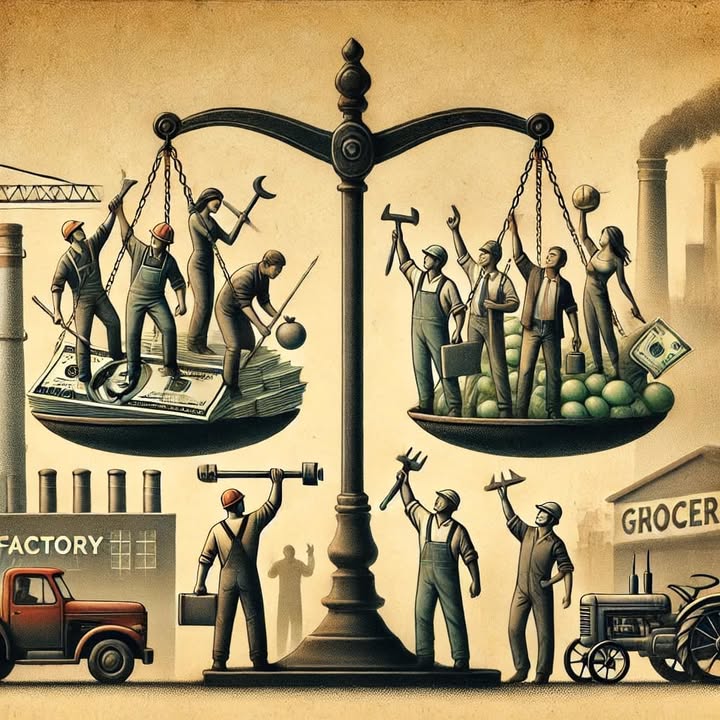
**The False Promise of Lower Prices**
For over half a century, Americans have been sold a promise that low prices would make life easier. At first glance, it seems logical—why not pay less for the same goods? But hidden beneath those savings is a cruel trade-off: suppressed wages, lost opportunity, and a system that prioritizes corporate profits over the dignity of work.
The truth is, that we’ve traded purchasing power for cheap goods, and in doing so, we’ve allowed wages to stagnate while productivity and profits soared. Since the 1970s, the average worker has seen little to no real wage growth, even as their efficiency and output reached unprecedented heights. Who benefits from this arrangement? Corporations, shareholders, and the wealthiest among us—while workers are left to fight for scraps in an economy that seems rigged against them.
Undocumented labor is one of the pillars propping up this system. Employers hire workers who are willing to accept lower wages and poorer working conditions because they lack the bargaining power to demand more. This depresses wages not just for undocumented workers but for American workers competing in the same sectors—agriculture, construction, hospitality, and beyond. The result? A labor market where the floor keeps sinking and the promise of fair wages is swept away.
But the problem runs deeper than exploitation. Society as a whole has to come to terms with a hard truth: workers are far more valuable than they’ve been led to believe. For decades, incremental wage increases—just enough to keep workers complacent—have conditioned us to think small. The idea of someone making double what they currently earn feels unthinkable, not because it’s impossible, but because most have only ever experienced pennies on the dollar when it comes to raises.
The reality is this: workers’ productivity, skills, and contributions to the economy are worth far more than what most are being paid. If wages had risen to match productivity over the past 50 years, many workers would already be earning double or even triple their current salaries. Instead, we’ve been sold the lie that the system would collapse if wages rose too quickly. It’s time to reject that falsehood.
What if, instead of chasing lower prices, we focused on raising incomes to the level they should have been all along? Imagine an economy where wages kept pace with inflation and productivity, where workers were fairly compensated for their contributions. Higher wages wouldn’t just put more money in workers’ pockets; they’d rebuild the purchasing power that has been eroded for generations.
Critics argue that higher wages would lead to rising prices—and they’re not wrong. But this isn’t a crisis; it’s a correction. When workers earn more, they spend more, driving growth across the economy. Increased wages may make some goods more expensive, but with greater purchasing power, the math balances out. What’s more, a fairer distribution of income reduces reliance on public assistance and creates a society where people can thrive, not just survive.
This isn’t an abstract idea—it’s a reckoning with the choices we’ve made as a society. For decades, we’ve prioritized cheap goods over fair wages, and convenience over quality. We’ve allowed corporations to exploit loopholes and skirt accountability, creating a system where the worker bears the burden. If we want real change, we need to rewrite the rules.
That means enforcing labor laws, holding employers accountable for hiring practices, and raising the minimum wage to reflect the true value of work. It means shifting the focus from corporate profits to worker prosperity. And perhaps most importantly, it means changing our mindset as consumers. We have to stop chasing the lowest price tag and start valuing quality, fairness, and sustainability.
America has always been a land of opportunity, but opportunity means nothing without dignity. A job should provide more than a paycheck—it should provide a path to stability, security, and success. To get there, we must break free from the false promise of low prices and fight for an economy that works for everyone.
Because in the end, it’s not about what something costs—it’s about what it’s worth.
What do you think?
~CA