
OpEd: The opinions expressed herein do not necessarily reflect the position of Appalachia Insider as an organization.
Published by Appalachia Insider · March 29, 2025
This opinion piece was contributed to Appalachia Insider. The views expressed are those of the author and do not necessarily reflect the views of Appalachia Insider.
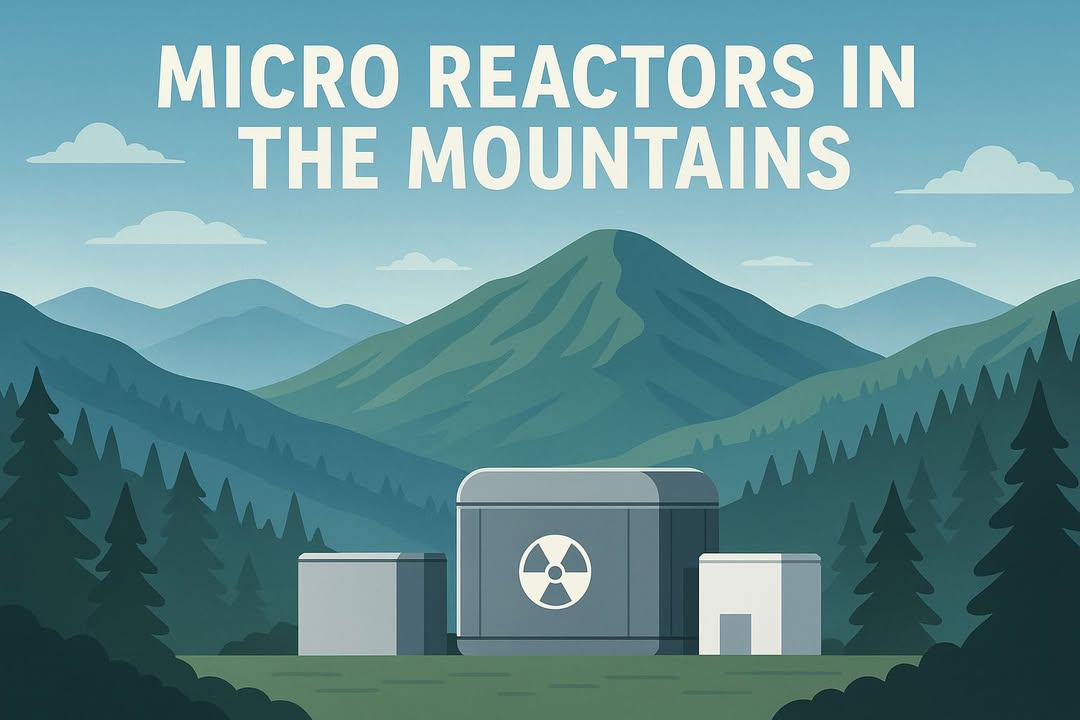
Nuclear in the Mountains 2—A Safer Future for Magoffin County
I recently posted an OpEd about bringing nuclear energy opportunities to Magoffin County, and I’ve read through all the feedback. I appreciate everyone who took the time to share their thoughts, concerns, and frustrations. It’s clear that the word ‘nuclear’ carries a lot of weight—and a lot of fear. And that’s completely understandable.
We’ve seen too many times when outside companies or politicians make big promises only to leave us with the wreckage when it doesn’t work out. And when people hear ‘nuclear,’ they think of Chernobyl or Fukushima—places where things went catastrophically wrong. The fear is real. It’s valid. And it shouldn’t be brushed off.
But what’s being talked about for Kentucky—and potentially for Magoffin County—is nothing like that. This isn’t about building some giant, risky power plant. It’s about looking at the newest, safest technology available.
Let me explain two things: Microreactors and Thorium Reactors.
• Microreactors: These are small, portable nuclear reactors that are designed to be fail-safe. If something goes wrong, they shut down automatically. They don’t need the massive cooling systems of the old designs. They’re built to handle disasters like floods, tornadoes, and earthquakes without any danger of meltdown. And they don’t produce the kind of long-lasting waste most people think about when they hear ‘nuclear.’
• Thorium Reactors: Instead of using uranium, these reactors use thorium, which is much safer. Thorium reactors can’t melt down the way traditional reactors can. And the waste they produce breaks down much faster and is easier to manage.
Now, let’s talk about safety. Coal has been our backbone for generations. It’s provided good, honest work to thousands of families. But it’s also caused real harm. Black lung. Pollution. And when you look at the numbers, coal has killed far more people over the years than nuclear power ever has.
Since 1999, pollution from coal-fired power plants has been responsible for about 460,000 deaths in the United States. That’s an average of roughly 21,900 deaths every year. And during the peak years between 1999 and 2007, coal pollution was linked to more than 43,000 deaths annually. Even in 2016, after coal usage had declined, coal pollution still caused over 3,100 deaths in a single year.
Compare that to nuclear power. In the entire history of nuclear energy in the United States, there have been zero deaths among the general public from commercial nuclear plant operations. None. Globally, there have been approximately 50 deaths among nuclear plant employees and contractors due to plant operations, but none of those occurred in the U.S.
Nuclear energy—especially with these new designs—doesn’t pollute the air or water. It doesn’t scar the land. And with these modern reactors, the risk of a disaster is almost nonexistent.
But here’s the thing—this isn’t something being forced on us. It’s an opportunity we can choose to pursue if it’s what we want. Not some company from New York coming in and telling us what to do. This is about whether we want to take the lead in a new, safer energy future—on our own terms.
I respect anyone who feels hesitant or even angry. We’ve been burned before, and no one should trust something just because it sounds good. But I believe Magoffin County deserves the opportunity to make this decision for itself.
If you’ve got questions or concerns, I want to hear them. And I’ll do my best to answer honestly and respectfully. Because if we’re going to build a better future, it’s got to be one we choose together.
What are your thoughts?
~CA