
OpEd-Nuclear in the Mountains: Why Magoffin County Should Pay Attention to Kentucky’s Next Energy Bet
Published by Appalachia Insider · February 13, 2026
This opinion piece was contributed to Appalachia Insider. The views expressed are those of the author and do not necessarily reflect the views of Appalachia Insider.
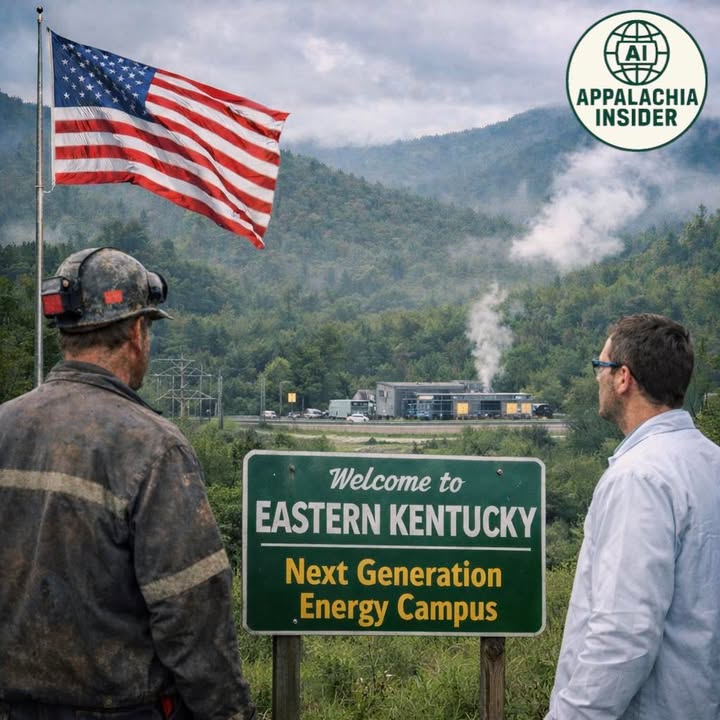
There’s a quiet but consequential shift happening in Kentucky’s energy debate, and this time it isn’t theoretical. It’s legislative, it’s targeted, and it’s aimed squarely at small modular nuclear reactors.
This session, Senate Republicans advanced Senate Bill 57, a proposal designed to jump start nuclear energy development in the Commonwealth by tackling one of the biggest barriers to entry: federal permitting. The bill would set aside up to $75 million to help cover the cost of Nuclear Regulatory Commission approvals for small modular reactor projects, costs that can run into the tens of millions of dollars long before a single shovel hits the ground.
The sponsor, Senator Danny Carroll, has been direct about the motivation. States like Tennessee and Texas are already moving aggressively into next generation nuclear. If Kentucky wants a seat at that table, it can’t afford to wait on the sidelines.
For regions like Eastern Kentucky, that matters.
*From Energy Past to Energy Future
Energy has never been abstract in the mountains. Coal wasn’t a talking point or a culture war. It was work. It powered homes, paid bills, and carried an entire region through generations of hard years. That history deserves respect, not erasure.
But the reality is changing whether we like it or not. Coal employment continues to shrink. Natural gas markets are volatile. And new industrial demand, especially from data centers and advanced manufacturing, requires reliable, always on power that intermittent sources can’t provide alone.
SB 57 doesn’t pretend nuclear is a silver bullet. What it does is acknowledge that if Kentucky wants to remain an energy state, it has to prepare for what comes next instead of clinging to what’s already fading.
That’s where small modular reactors come in.
*What We’re Actually Talking About When We Say Nuclear
This conversation isn’t about massive Cold War era nuclear plants. SB 57 is explicitly aimed at small modular reactors, or SMRs, which are fundamentally different in scale, design, and safety profile.
SMRs are smaller by design, often producing a fraction of the power of traditional reactors. Many are built partially or fully underground. Most rely on passive safety systems that shut the reactor down automatically without human intervention or external power. Lower operating pressure, simpler cooling systems, and standardized designs reduce both complexity and risk.
That matters in a region where trust has to be earned, not demanded.
Over the long term, nuclear energy has caused fewer deaths per unit of energy produced than coal, oil, or gas. Coal didn’t harm people because miners were careless. It harmed people because burning it releases particulates into the air every day. Nuclear power produces no greenhouse gases during operation and creates a small, tightly controlled waste stream that is regulated from beginning to end.
None of that makes coal a villain. It simply makes nuclear a serious option.
*The Risk Question Deserves an Honest Answer
Critics of SB 57 raise a legitimate concern, and it shouldn’t be brushed aside. The bill allows regulated utilities to seek recovery of certain permitting related costs through the Public Service Commission. If projects fail, consumer advocates worry that ratepayers could be left holding the bag.
That concern deserves scrutiny, transparency, and strong guardrails. But it also needs to be weighed against the cost of doing nothing.
Federal permitting costs are one of the biggest reasons nuclear projects never get off the ground. Without help clearing that hurdle, Kentucky effectively guarantees these investments go elsewhere. The risk then isn’t hypothetical. It’s certain. Jobs, training programs, and long term infrastructure simply bypass the Commonwealth.
The real question isn’t whether there’s risk. It’s who bears it and whether the return is worth pursuing with eyes open.
*Why This Matters to Magoffin County
Eastern Kentucky already knows energy. It knows heavy industry. It knows technical work that demands discipline, training, and pride. Those are not liabilities. They’re assets.
If SMRs are going to be built in Kentucky, the communities that prepare early will have the strongest voice in shaping how, where, and under what conditions they happen. That includes workforce development, site selection, environmental safeguards, and local oversight.
If we sit this out, decisions will be made elsewhere, by people who don’t live here and don’t answer to us.
*The Torch Is Still Ours
SB 57 doesn’t force nuclear on anyone. It opens the door. What happens next depends on whether communities like ours choose to walk through it thoughtfully, cautiously, and on our own terms.
Eastern Kentucky powered this country once before. We didn’t do it loudly. We did it reliably.
If nuclear is going to be part of Kentucky’s future, the mountains should be part of that conversation from the beginning, not as an afterthought.
Not to erase our past.
But to build on it.
~CA
OpEd: The opinions expressed herein do not necessarily reflect the position of Appalachia Insider as an organization.
#AppalachiaInsider
#KentuckyEnergy
#NuclearEnergy
#SmallModularReactors
#EasternKentucky
#EnergyPolicy