
OpEd-Kentucky’s Landfill Fights Aren’t About Trash
Published by Appalachia Insider · March 2, 2026
This opinion piece was contributed to Appalachia Insider. The views expressed are those of the author and do not necessarily reflect the views of Appalachia Insider.
I have sat in enough county meetings to recognize the sound.
It isn’t yelling at first. It’s the shuffle of papers. The low murmur before someone stands up. A man clears his throat. A woman grips a folded copy of something printed off Facebook. Someone says, “We just want answers.”
Then the word landfill gets spoken out loud, and the room tightens.
I’ve sat in those chairs too. I’ve felt that same knot in my stomach. I’ve wondered who decided this and when, and why it feels like the public always hears about it at the last possible moment. It’s easy to feel like something is being done to you instead of with you.
That scene has played out across Kentucky lately. Pike County. Montgomery County. Border communities watching what might cross over from Tennessee. Citizens showing up. Officials shifting in their seats. Proposals. Reversals. Hearings. Bills filed in Frankfort about environmental standards and regulatory limits. Everyone talking past each other as if this fight began yesterday.
It didn’t.
Kentucky’s landfill fights aren’t about trash. They’re about shelf life.
Landfills do not appear out of nowhere. They fill slowly. Cell by cell. Year by year. Truck by truck. The engineers knew the lifespan when they designed them. Counties knew roughly how many years of airspace remained. None of this is a surprise to the math.
What surprises us is when the math finally becomes visible.
If an existing landfill is reaching capacity, there are only three options. Expand. Build new. Or haul farther and pay more. None of those are pleasant. All of them are expensive. All of them were predictable decades ago.
When I was younger, I didn’t think about any of this. Trash disappeared. Water flowed. Sewer flushed. It felt permanent. I assumed someone somewhere had it handled. Most of us did. We enjoyed the benefit without thinking about the timeline.
That assumption is what’s expiring now.
Stewardship Economics doesn’t allow us to treat this like a villain story. It forces us to treat it like a systems story.
Productive Investment means we don’t wait until the cell is nearly full before planning the next phase. It means we treat landfill capacity the same way we treat water pressure or bridge integrity. As a measurable asset with a timeline. If we only act when crisis hits, that isn’t bad luck. That’s failed planning.
Taxation as a Tool of Discipline means we don’t finance generational replacement as local punishment. After World War II, this country built foundational systems through federal grants. Rural water lines. Sewer systems. Highways. We treated those as national stability investments. Over time, the model shifted toward loans. Risk moved downhill. Replacement became debt. And when replacement equals debt, leaders delay. They patch. They defer. They hope the problem lands on someone else’s watch.
That structure produces exactly what we’re seeing now.
A Strong Domestic Base means rural communities are not sacrifice zones. If trash from multiple regions flows into one county because the land is cheaper and resistance is assumed to be weaker, people notice. They feel it. They react. That reaction isn’t extremism. It’s an instinct for stability.
At the same time, when lawmakers debate limiting environmental rules to federal baselines or redefining regulatory thresholds, timing matters. Whether you support those measures or oppose them, introducing them in the middle of visible infrastructure strain adds fuel to an already tense moment. When people sense systems aging and protections shifting at the same time, trust thins quickly.
The mistake would be to reduce this to partisan theater. Republicans versus Democrats. Environmentalists versus business. Growth versus obstruction.
The deeper reality is generational turnover.
The men who built many of these systems are gone. The shelf life they designed for is ending now. And we are the ones sitting in the folding chairs at the courthouse when the bill comes due.
Stewardship doesn’t demand that every landfill proposal be rejected. Nor does it demand blind approval in the name of commerce. It demands something harder.
Plan before crisis.
Fund replacement at the level that can absorb it.
Be honest about trade-offs.
Distribute risk fairly.
If the federal government can issue currency, then generational infrastructure renewal shouldn’t be financed as crushing local debt. If the state wants regulatory consistency, it must also ensure communities feel protected, not exposed. If counties want stability, they must map capacity, publish timelines, and speak plainly about what is coming before it becomes urgent.
Because once urgency arrives, trust is already thin.
At the heart of every landfill meeting isn’t trash. It’s fear. Fear that someone else will profit while the community carries the burden. Fear that decisions are made far away. Fear that once the trucks start rolling, they never stop.
Stewardship answers that fear not with slogans, but with structure.
Show the numbers early.
Plan the transition openly.
Align capital with lifespan.
Treat foundational systems as shared responsibility, not local punishment.
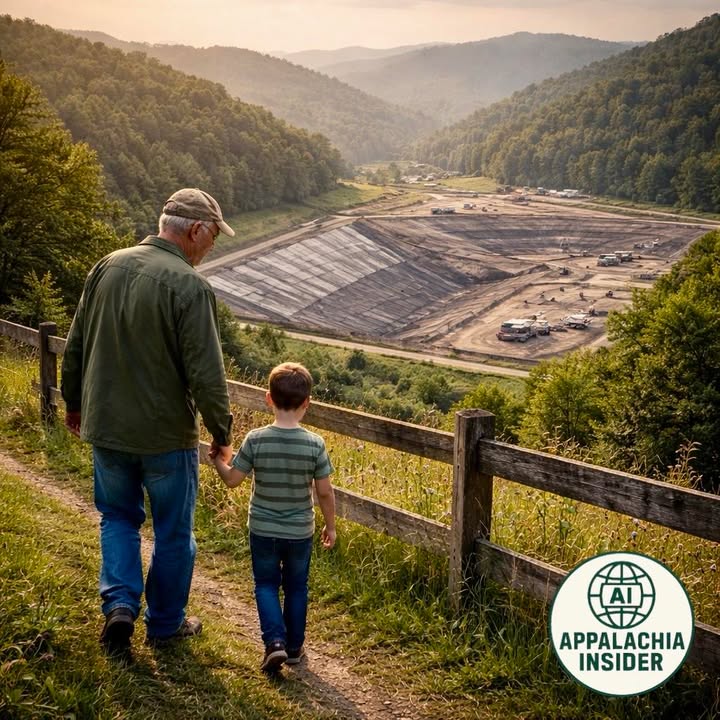
A child shouldn’t grow up wondering where the water comes from. A family shouldn’t have to guess where the trash goes or whether it will come back through their soil and streams. Civilization works best when those questions never need to be asked.
Infrastructure is generational work. It was handed to us. It is expiring under us. And whether we handle this moment with discipline or with panic will determine what our children inherit.
The room will still shuffle. Someone will still clear their throat. The word landfill will still tighten the air.
The question is whether, this time, we walk in prepared.
~CA
OpEd: The preceding information does not necessarily reflect the views of Appalachia Insider as an organization.
#AppalachiaInsider #StewardshipEconomics #EasternKentucky #Infrastructure #KentuckyPolitics #LocalGovernment