
OpEd-“The Petrodollar Didn’t Make Us Rich. It Made Us Consumers.
Published by Appalachia Insider · March 21, 2026
This opinion piece was contributed to Appalachia Insider. The views expressed are those of the author and do not necessarily reflect the views of Appalachia Insider.
“What “Full Faith and Credit” Really Means”
There is a question I have been turning over in my mind for a while now, and it sits quietly underneath a lot of the news we see but rarely gets said out loud. People ask what happens if the petrodollar falls. They ask what happens if the Middle East stops trusting the United States to secure oil routes. They ask what happens if the world stops needing our currency the way it does now.
Most of the answers you hear are loud and dramatic. Economic collapse. The end of America. The dollar becomes worthless. But I don’t think those are the right questions.
The right question is much simpler and much harder at the same time. The dollar is backed by the full faith and credit of the United States. We have all heard that phrase our entire lives, but almost nobody ever stops to ask what it actually means.
It does not mean gold. It does not mean oil. It does not even mean the military, at least not directly.
What it really means is that the United States government has the power to issue currency, the power to tax in that currency, and the power to enforce contracts in that currency. The money comes first. The taxes come after. And underneath all of that is something even more important. It means that the United States is expected to still exist in the future, still produce real things, still have a functioning society, and still have a population capable of working, building, and creating value.
The dollar is not backed by a metal or a commodity. It is backed by the productive capacity of the American people and the stability of the American system.
I think about this sometimes when I drive through Eastern Kentucky and pass those old places along the river where factories and machine shops used to sit. The buildings are gone now, but the land still remembers. The gravel lots sit a little higher than the road, and sometimes there is an old piece of fence or a loading dock left behind, like the place is waiting for the shift whistle to blow again, but it never does.
Those places used to make things. Not paper wealth. Not digital wealth. Real things. Around here it was coal, timber, machine work, rail, and fabrication. It was men who could weld, fix an engine, run a sawmill, lay track, or keep a dragline running. You could point at what a man did all day and see it. A truck loaded with coal. A stack of cut lumber. A pallet of parts from a machine shop. A piece of equipment running again because somebody knew how to fix it. Something you could drop on your foot and know it was real.
And when those places closed, the jobs did not just leave. The knowledge left. The skill left. The purpose left.
We did not just lose income. We lost capability.
Places like Eastern Kentucky did not become poor because they were not valuable. They became poor because the economy stopped valuing what they were good at.
For the last fifty years, America has lived in a very unusual position in world history. We have been able to consume more than we produce because the world needed our dollars. Oil was priced in dollars, global trade was done in dollars, and countries all over the world would sell us real goods in exchange for pieces of paper and digital entries that we created.
Then those dollars would come back to the United States and be parked in Treasury bonds, which are really just interest-bearing dollars. That money did not fund our spending the way people think. The spending came first. The bonds came after. But the result felt the same. We were able to consume more than we produced for a very long time, and it was easy to mistake that for real wealth.
But cheap goods are not the same thing as a strong country.
A strong country builds things. A strong country produces energy. A strong country grows food. A strong country manufactures steel, machinery, vehicles, and equipment. A strong country maintains its roads, its bridges, its water systems, and its power grid.
That is real wealth. That is real capacity. Money is just a claim on that capacity. It is a receipt, not the product itself.
So when people ask what happens if the petrodollar weakens, I think they are asking the wrong question.
The real question is what happens if we are forced to become a producing nation again instead of a consuming nation.
Because that is what a weaker dollar actually does. It makes imports more expensive, but it also makes domestic production more competitive. It makes it cheaper to build here relative to overseas. It raises the value of labor that produces real things instead of labor that just moves money around on a screen.
From a Stewardship perspective, that is not necessarily decline. That is rebalancing.
It does not feel good at first because prices go up and the easy system we are used to stops working the way it did before. But if that pressure forces a country to rebuild its industry, its trades, its infrastructure, and its energy systems, then what looks like decline on paper can actually be a return to strength in reality.
The real danger is not that the petrodollar weakens. The real danger is timing.
If the global system shifts before we rebuild our productive capacity, then we get inflation, shortages, and a painful adjustment because we are trying to rebuild industry in a hurry. If the global system shifts after we rebuild our productive capacity, then we get a manufacturing renaissance and a more self reliant country.
The difference between those two futures is not the dollar itself. The difference is whether we still remember how to build.
When you start looking at the country through that lens, you stop looking at the stock market and the national debt as the main indicators of health. You start asking different questions.
How many welders do we have.
How many machinists.
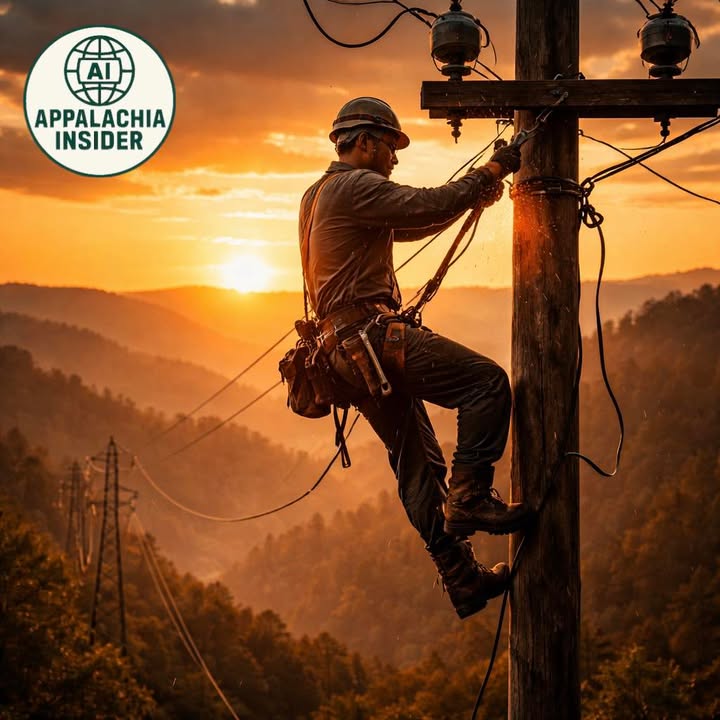
How many electricians and linemen.
How much steel can we produce.
How much electricity can we generate.
How many miles of rail can we build in a year.
How many transformers can we manufacture.
How many engineers are we graduating.
How many shipyards do we have.
Those are not the numbers you see on the news every night, but those are the numbers that determine whether a country is actually capable of taking care of itself.
You can print money, but you cannot print a skilled machinist. You can create dollars with a keystroke, but you cannot create a power plant, a bridge, or a factory without people who know how to build and maintain those things.
Money is a tool. Capability is wealth.
In a fiat system, the real limit is not money. The real limit is labor, skill, energy, materials, and organization. That is the real national balance sheet, whether anyone in Washington wants to say it that way or not.
So if the world changes, and it very well might, the question is not whether the dollar survives. The question is whether America is still a country that can produce real wealth, or whether it has become a country that only knows how to consume it.
Because in the end, the dollar is just a claim on American production. And a claim is only worth something if the thing it represents still exists.
In the end, the dollar is just a receipt. And a receipt is only useful if the store still exists.
And a country only works if the people inside it still know how to build, fix, grow, and keep things running when something breaks.
The dollar is not wealth.
The country is wealth.
And stewardship means remembering how to build.
~CA
OpEd: The preceding information does not necessarily reflect the views of Appalachia Insider as an organization.
#AppalachiaInsider #EasternKentucky #Stewardship #Economics #Manufacturing #OpEd