
OpEd-The Steward’s Farm Bill: Restoring the Backbone of American Agriculture
Published by Appalachia Insider · March 30, 2026
This opinion piece was contributed to Appalachia Insider. The views expressed are those of the author and do not necessarily reflect the views of Appalachia Insider.
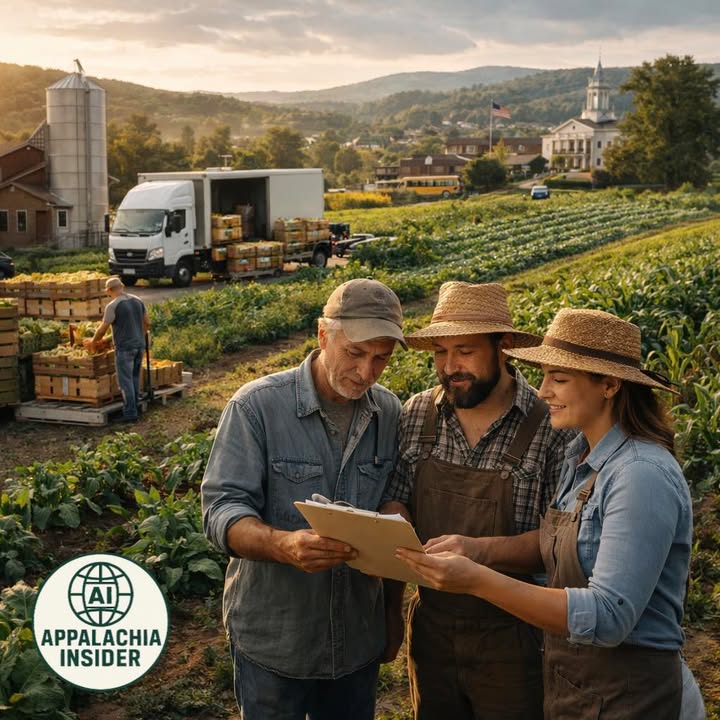
For nearly a century, farm bills have funneled billions of dollars into keeping America’s fields producing. But the story of that support is not one of fairness. It has been tilted toward the largest landholders, the most mechanized operations, and the most export-dependent crops. We have built a system where a thousand acres of corn grown for ethanol receives federal lifelines, while a family farm growing potatoes, beans, and tomatoes for a school district is left to survive on scraps.
A Steward’s Farm Bill would not shrink the federal role in agriculture. On the contrary, it would expand it, but on new terms. It would measure success not by how many bushels leave our ports, but by how much nourishment stays in our towns, how many jobs remain rooted in the soil, and how stable our communities become.
First, subsidies would be redirected. The government would no longer write its largest checks to fields of corn and soy destined for foreign markets. Instead, payments would flow to farmers who diversify. If you grow three or more staple crops that Americans actually eat, you qualify for direct support. If you rotate your land to restore soil, you qualify again. If you dedicate acreage to local supply chains, you qualify once more. In short, the system would pay not for size, but for stewardship.
Second, procurement would become a guarantee. The federal government is the largest single buyer of food in the nation through schools, hospitals, the military, and prisons. A Steward’s Farm Bill would require that a growing share of those meals come directly from regional producers. This would turn small and medium farms into government partners overnight, giving them stable contracts equal in strength to the foreign export markets that massive farms now enjoy.
Third, stewardship outcomes would be rewarded. Federal dollars would flow not only to crops, but to practices. Farmers who restore watersheds, rebuild topsoil, employ local workers, and invest in community processing would receive payments tied to those outcomes. In other words, we would pay farmers not just to grow, but to sustain.
Fourth, infrastructure would be seeded. A single farmer cannot justify a cannery, a cold storage hub, or a flour mill. But a region can. The federal role would be to underwrite these shared facilities, giving medium and small farms the same processing muscle that industrial farms already command through global conglomerates. This would allow local food to scale without surrendering control.
Finally, taxation would be used as discipline. Corporate monopolies that squeeze out family farms would be penalized. Speculators who hoard farmland as an asset class would be taxed until they let it go. Foreign buyers treating American soil as an investment vehicle would be blocked outright. The field must belong to those who work it, not to those who treat it as another chip in a casino.
A Steward’s Farm Bill would not end federal support for agriculture. It would end its capture by the largest and least accountable players. It would direct the river of federal dollars into the smaller channels where it can irrigate real communities, not just corporate profits. And in doing so, it would restore what America once had: a farm economy rooted in families, towns, and regions, where money stays home and work is dignified.
~CA
OpEd: The preceding information does not necessarily reflect the views of Appalachia Insider as an organization.
#AppalachiaInsider #OpEd #StewardshipEconomics #FarmBill #AmericanAgriculture #FamilyFarms #FoodSecurity #RuralAmerica #BuyLocal #SupportFarmers