
OpEd-The Pragmatic Path in Practice: A Local Stewardship Plan
Published by Appalachia Insider · April 7, 2026
This opinion piece was contributed to Appalachia Insider. The views expressed are those of the author and do not necessarily reflect the views of Appalachia Insider.
For years, Eastern Kentucky has been told it is poor, broken, and beyond saving without outside rescue. We have watched the same cycle repeat. New officials, old habits. Grants missed. Roads patched instead of fixed. Water systems limping along. Families doing their best inside a system that seems content to drift.
It is not because our people stopped working hard. It is because our government stopped working for them.
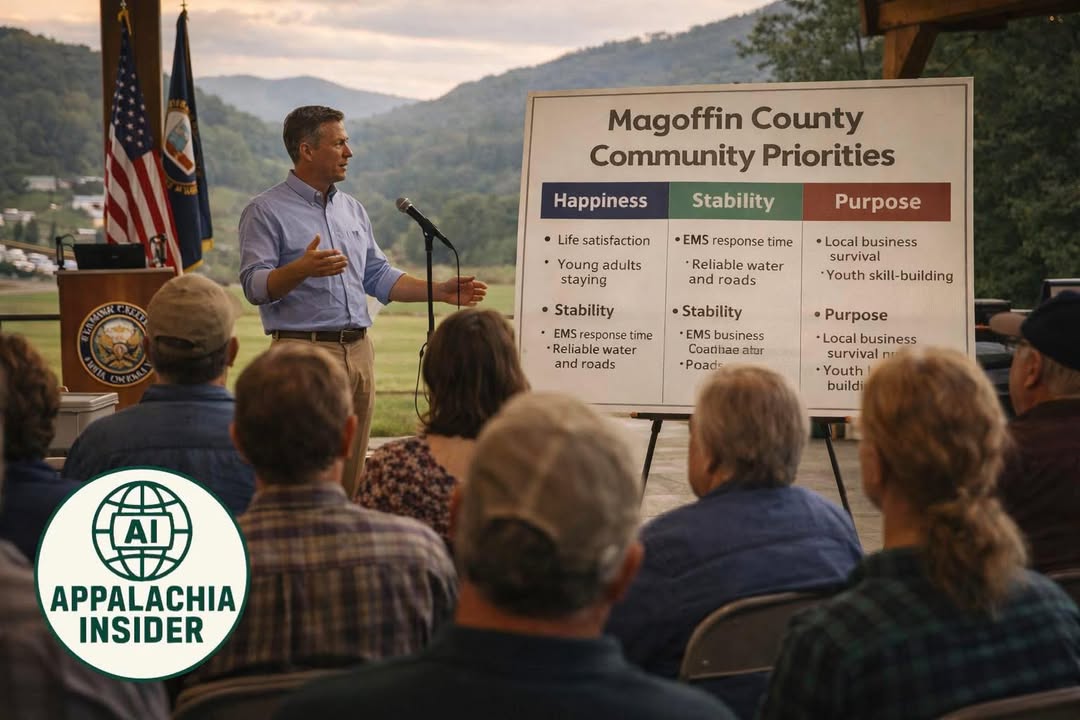
The Pragmatic Path is a way to change that. It is not a slogan and not a party platform. It is a simple agreement to judge every county decision by three outcomes.
Are our people happier.
Are they more stable.
Do they have more purpose in their lives.
If a policy does not move at least one of those in the right direction, we do not do it.
The essay version of this idea talks about why that matters morally. This plan explains how to do it practically.
This is a field guide for one county that is ready to act.
*Step One: Name the Outcomes and Tell the Truth
Magoffin County adopts three core goals:
Happiness, Stability, and Purpose.
Local leaders agree that from this point forward, every major project and budget decision will be judged against these questions.
Then the county tells the truth about where we are starting. No blame. No excuses. Just an honest baseline so people know what is being rebuilt.
*Step Two: Establish the Stewardship Office
The county creates a small Stewardship Office, even if it begins with one full time coordinator.
Its role is to:
• Gather basic data
• Build the county scorecard
• Coordinate cross department meetings
• Communicate progress in plain language
The Stewardship Office holds no legal authority over any department. It cannot override decisions, enforce compliance, or control anyone’s budget. Its job is to gather information, coordinate communication, and present the truth clearly to county leaders and the public. Its strength comes from clarity, not control.
-Staffing
Magoffin can recruit someone home, borrow expertise for a time, or grow someone from within. Degrees are optional. Follow through is not.
-Funding
The county redirects a small, stable revenue stream. As Stewardship Economics argues, the issue is not the lack of money but the lack of alignment. Tens of millions flow through Magoffin yearly. This office stops the leaks by bringing focus.
*Step Three: Build the First Scorecard
The scorecard becomes the county’s compass.
-Happiness
Twice yearly life satisfaction question, plus net migration of young adults.
-Stability
EMS response times, water advisories, commute reliability, and households without a safety cushion.
-Purpose
Volunteer involvement, youth participation, local business survival, and adult skill training.
It will not flatter us at the beginning. It is not supposed to. It is a mirror, not a trophy.
*Step Four: Pick Three Visible Wins
The county chooses three practical projects that can show real improvement within six to twelve months.
Examples include:
• Fixing a dangerous road section
• Stabilizing a failing water line
• Improving EMS coverage in an underserved area
Set baselines and targets for each. Report progress plainly.
Early wins matter because they prove change is possible.
*Step Five: Open the Windows
Once the scorecard exists and early projects begin, the county opens the windows.
• Post the scorecard publicly
• Hold one open outcome meeting each quarter
• Release short, direct updates from every department
The goal is to speak to residents as adults about the condition of their own county.
-Full Social Media Accountability
Transparency does not work if it lives only in meeting minutes or buried PDFs. The county commits to posting every scorecard update, every project report, and every delay or correction on its official social media pages. All updates are written in simple language, with clear notes anyone can understand. If the work is worth doing, it is worth showing. This keeps the public informed, prevents quiet backtracking, and turns accountability into a daily habit instead of a yearly performance.
This is the single most effective way to build trust quickly, because it meets people where they already are.
*Step Six: Plan to Survive the First Year
The first year is the crucible. Habits push back. Interests push back. People who praised the idea may try to kill it quietly.
The county prepares by:
• Making the Stewardship Office accountable to the full court and the public
• Building a circle of community supporters outside of government
• Committing in writing to publish the scorecard for at least four quarters
If we are not willing to endure discomfort for one year, we are not serious about repairing decades of drift.
*Step Seven: Lock It In
When the county survives the first year and the public begins to trust the process, it is time to lock the Pragmatic Path into place.
This can happen through:
• A resolution committing to the three outcomes
• Requirements for major projects to state how they improve Happiness, Stability, and Purpose
• Interlocal agreements inviting other boards to join the scorecard process
Over time, this turns stewardship from a reform effort into the default way of governing.
*Who This Is For
This plan is for people who are tired of drifting but not tired of hoping.
Judges who want a framework that outlasts their term.
Magistrates who want to stop patching the same problems every year.
Teachers, nurses, clerks, parents, and business owners who know the systems are broken but have never been given a practical path forward.
The essays explain the philosophy.
This plan explains the work.
Easter Kentucky does not need permission from Frankfort or Washington.
It can begin with the truth.
It can measure what matters.
It can build a steady office and three early wins.
It can open the windows and keep them open.
If we do that, slowly and honestly, people will feel the difference long before they see it on a chart.
And once they feel it, they will fight to keep it.
~CA
OpEd: The preceding information does not necessarily reflect the views of Appalachia Insider as an organization.
#AppalachiaInsider #MagoffinCounty #pragmaticpath #localgovernment #StewardshipEconomics #community