
OpEd- They Made Us Feel Guilty. Then They Cashed In.
Published by Appalachia Insider · April 15, 2026
This opinion piece was contributed to Appalachia Insider. The views expressed are those of the author and do not necessarily reflect the views of Appalachia Insider.
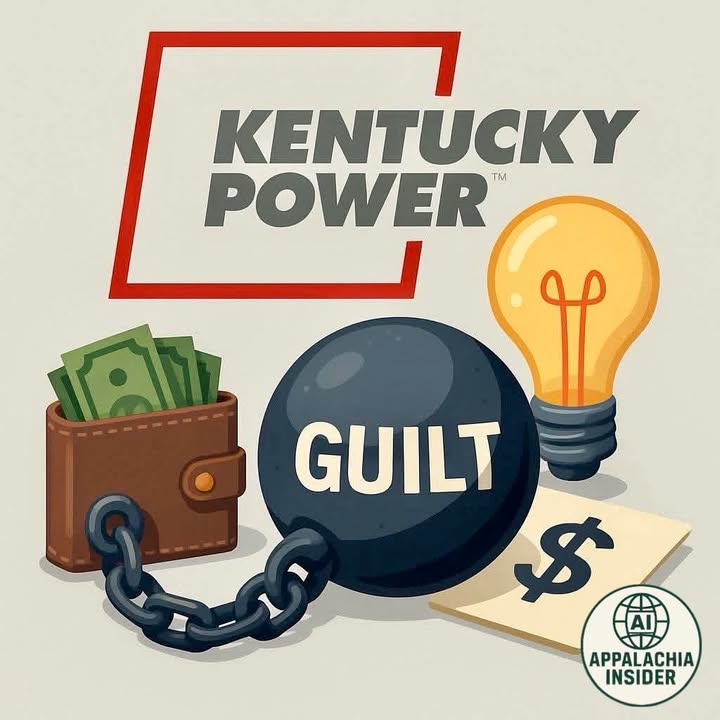
I looked over my electric bill the other day, and something didn’t sit right.
Every light fixture in this house has been replaced. Not just the bulbs, the entire fixtures. New switches. New outlets. Every appliance I own is Energy Star rated. Efficient. Modern. I’ve done everything they told us would make a difference. The upgrades weren’t cheap, but I figured they’d pay off in the long run. After all, isn’t that what we were promised?
And yet, the bill hasn’t gone down.
Not once.
Some months, it’s actually higher than it used to be, back when the house was running on outdated fixtures and secondhand machines. That’s when it finally hit me.
They were never planning to let us benefit.
Because if using less energy doesn’t lower your bill, then what are you actually being rewarded for? The truth is, you’re not. It doesn’t matter how much you cut back. They’ll just raise the rates. Add a new surcharge. Slip in a seasonal fee. The bill stays the same. Or worse. And the electric company’s profits stay untouched.
And it’s all perfectly legal.
That’s not a conspiracy theory. It’s the design.
In some states, they’ve even formalized it through something called revenue decoupling, a policy that lets utilities raise prices when customers conserve power, just to keep their earnings stable. But even in places like Kentucky, where it’s not officially called decoupling, the game is the same.
They tack on “lost revenue” riders. Infrastructure surcharges. Reliability fees. They protect their bottom line with cost-recovery tools and guaranteed earnings, even if your usage goes down. So whether it’s called decoupling or not, the result is identical:
You use less. They charge more.
It was supposed to help them keep the lights on. Instead, it gave them a license to charge more for less.
When you conserve, they collect.
Meanwhile, families like mine are doing everything we can to be responsible. We’re investing in our homes. Replacing the old with the new. Making the kinds of choices that should come with a payoff. But they don’t. Not because the upgrades don’t work. But because the system was never designed to reward effort. It was built to preserve profit.
They frame it in the language of modernization and clean energy. And I support those goals. I want a resilient grid. I want cleaner production. But if a household can upgrade every corner of its energy footprint and still see no relief on the monthly bill, then what we’re calling “progress” might just be another con. Another guilt campaign. Another way to make people feel like they’re the problem, while someone else quietly pockets the difference.
Use more, pay more.
Use less? Still pay more.
Upgrade your home? Pay for that too.
They’ve made it so there’s no winning path for the consumer.
No way to come out ahead. No way to opt out.
And here’s the part most defenders of the system don’t want to admit. You can justify anything with enough bureaucracy. They’ll say the rates are fair. The grid needs upgrades. That prices reflect real costs. And some of that may be true.
But none of it explains why the burden always falls on the same people, those of us trying to do the right thing.
That’s where Stewardship Economics draws a hard line.
In a stewardship model, energy isn’t treated as a luxury commodity. It’s treated as a national utility. A tool for empowering people, not extracting from them. If utilities want to be guaranteed revenue, then the public should be guaranteed value. And if families invest in efficiency, then they should be able to see it. Not just in some environmental report, but in their actual bill.
That doesn’t mean utilities can’t be profitable. But profit must be tied to outcomes. Grid stability. Affordability. Real savings. Not financial engineering. Not baked-in pricing guarantees. No hidden fees.
Because what we have now isn’t just broken. It’s dishonest.
We were sold the idea that responsibility would be rewarded.
Instead, they used our guilt as leverage.
They turned good intentions into new revenue streams.
And that’s not stewardship.
That’s theft.
I did what I was asked to do.
I spent the money.
I made the changes.
And nothing changed, except the bill.
So no, I’m not anti-energy. I’m not anti-modernization.
I’m anti-rigged systems.
And this one is long overdue for a reckoning.
~CA
Disclaimer: Originally posted 06/2025
OpEd: The following information does not necessarily reflect the views of Appalachia Insider as an organization.
#AppalachiaInsider #kentuckypower #EnergyEfficiency #environment